Arrest of Nasrin Sotoudeh and enforced disappearance of Ahmadreza Haeri
On 1 April 2026, woman human rights defender Nasrin Sotoudeh was arrested in Tehran by agents of Iranian Ministry of Intelligence and transferred to an unknown detention centre. The reason behind the arrest or the charges against the woman human rights defender remain unknown. On 30 March 2026, human rights defender Ahmadreza Haeri, who was being held in Qezel Hesar Prison in Karaj province, was forcibly disappeared. Following the execution of two political political prisoners in Qezel Hesar Prison on 29 March 2026, the human rights defender and anti-death penalty campaigner was transferred to an unknown location together with 22 other political prisoners. These recent violations against Nasrin Sotoudeh and Ahmadreza Haeri demonstrate the heightened risk that human rights defenders are exposed to during the ongoing armed conflict.
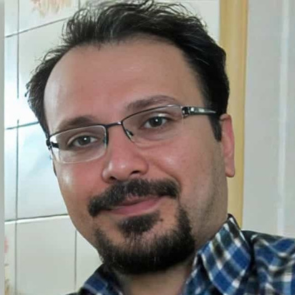 Ahmadreza Haeri is a human rights defender and anti-death penalty campaigner. He has been advocating for prisoners’ rights, including their right to life, through his involvement in the “Tuesdays No-to-Execution” campaign. This campaign was started by a group of prisoners to raise awareness about the executions in Iran and to bring to light the situation of prisoners on death row. The campaign has since grown momentum in Iran, outside of its prisons. The human rights defender has been targeted for his role in the campaign, including facing charges of “propaganda against state.”
On 1 April 2026, woman human rights defender Nasrin Sotoudeh was arrested in Tehran by agents of Iranian Ministry of Intelligence and transferred to an unknown detention centre. The reason behind the arrest or the charges against the woman human rights defender remain unknown. On 30 March 2026, human rights defender Ahmadreza Haeri, who was being held in Qezel Hesar Prison in Karaj province, was forcibly disappeared. Following the execution of two political political prisoners in Qezel Hesar Prison on 29 March 2026, the human rights defender and anti-death penalty campaigner was transferred to an unknown location together with 22 other political prisoners. These recent violations against Nasrin Sotoudeh and Ahmadreza Haeri demonstrate the heightened risk that human rights defenders are exposed to during the ongoing armed conflict.
Nasrin Sotoudeh is prominent woman human rights defender and lawyer, who has dedicated her legal career to representing opposition activists, women’s rights activists, and young prisoners. Nasrin Sotouteh is the recipient of numerous human rights awards, including the European Parliament’s Sahkarov Prize for Freedom of Thought in 2012 and the Right Livelihood Award in 2020.
Ahmadreza Haeri is a human rights defender and anti-death penalty campaigner. He has been advocating for prisoners’ rights, including their right to life, through his involvement in the “Tuesdays No-to-Execution” campaign. This campaign was started by a group of prisoners to raise awareness about the executions in Iran and to bring to light the situation of prisoners on death row. The campaign has since grown momentum in Iran, outside of its prisons. The human rights defender has been targeted for his role in the campaign, including facing charges of “propaganda against state.”
On 2 April 2026, Nasrin Sotoudeh’s daughter Mehraveh Khandan reported that the woman human rights defender was arrested the previous night in Tehran. The authorities in Iran have arrested Nasrin Sotoudeh and committed human rights violations against her multiple times in the past. This recent arrest appears to be part of this systematic targeting of the woman human rights defender in retaliation for her peaceful and legitimate human rights work. Her arrest also reflect the increasing reprisals against human rights defenders in Iran since the beginning of the armed conflict in the Middle East on 28 February 2026.
Nasrin Sotoudeh has been arbitrarily detained multiple times as a result of her human rights work. In June 2018, she was arrested and sentenced in two different cases to 38 years in prison and 148 lashes. She was released early on medical ground in 2021, but her sentences were suspended and the human rights defender still faced seven executable years of imprisonment. In November 2023, the she was rearrested at the funeral of Armita Gravand and arbitrarily detained in Evin Prison for 17 days before being released on bail. In July 2024, Nasrin Sotodeh was sentenced to eight years imprisonment on the charges of “gathering and colluding against national security”, and for disregarding the mandatory veiling laws, by Branch 29 of the Tehran Revolutionary court and Branch 1097 of Ershad Judicial Complex, the criminal department II.
Her family has been targeted on several instanced. On 17 August 2020, Mehraveh Khandan was arbitrarily arrested by five security officers at her home in Tehran, and transferred to the court in Evin prison before being released on bail. On 13 December 2024, Nasrin Sotoudeh’s husband, human rights defender Reza Khandan, was arrested and taken into custody at a police station in Tehran. He advocates against compulsory veiling rules and the death penalty in Iran. In 2019, he was sentenced to six years in prison on trumped up charges. Reza Khandan is currently detained in Evin Prison. His son Nima Khandan was beaten and temporarily detained by prison guards when visiting his father in January 2025 and was threatened with legal actions.
On 30 March 2026, human rights defender Ahmadreza Haeri was forcibly disappeared. His last known location is Qezel Hesar Prison in Karaj province, where he had been detained since 2024. Following the execution of two political political prisoners in Qezel Hesar Prison on 29 March 2026, the human rights defender and anti-death penalty campaigner was transferred to an unknown location together with 22 other political prisoners. According to reports, at least nine political prisoners have been executed in Iran since the beginning of the armed conflict on 28 February 2026. The executions, disappearances, and detentions of human rights defenders signal the significant risks for the safety and security of the prisoners in Iran, particularly during the ongoing armed conflict.
On 12 November 2024, Ahmadreza Haeri announced that Branch 36 of the Tehran Revolutionary Court had increased the human rights defender’s prison sentence to four years on the charge of “gathering and collusion with the intention of acting against national security,” one year for “propaganda against the state,” and 15 months for “spreading disinformation.” On 15 October 2022, the human rights defender was initially sentenced to three years in prison on the same charges.
Front Line Defenders expresses its deep concern over the arbitrary arrests and detention of Nasrin Sotoudeh and the enforced disappearance of Ahmadreza Haeri, particularly as this exposes them to significant risks to their life and safety – human rights organisations have reported a severe deterioration of the conditions in Iranian prisons during the armed conflict. Front Line Defenders also expresses its concern for all other political prisoners in Iran, especially due the precedent of Israeli forces attacking the Evin compound in June 2025, which according to the United Nations Fact Finding Mission on Iran may have amounted to a war crime. Human rights defender Reza Khandan was among the prisoners who were temporarily relocated following this attack.
Front Line Defenders urges the authorities in Iran to:
- Immediately release Nasrin Sotoudeh, Ahmadreza Haeri, and Reza Khandan, and disclose the whereabout of Nasrin Sotoudeh and Ahmadreza Haeri as it appears that they were arrested and detained solely due to their legitimate human rights work;
- Ensure that the detention conditions of Nasrin Sotoudeh, Ahmadreza Haeri, and Reza Khandan adhere to the ‘Body of Principles for the Protection of All Persons under Any Form of Detention or Imprisonment', adopted by UN General Assembly resolution 43/173 of 9 December 1988;
- Release all detained human rights defenders under humanitarian grounds amid the armed conflict;
- Cease targeting human rights defenders, and guarantee that they are able to carry out their legitimate human rights activities without fear of reprisal and free of all restrictions, including judicial harassment.
- Impose an immediate moratorium on executions and guarantee the right to due processes and fair trial for detained human rights defenders and political prisoners, particularly those on death row.

