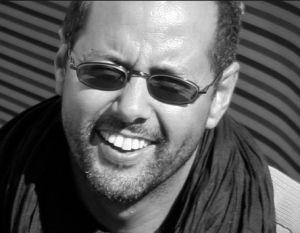
Concern over deteriorating health of Sahrawi human rights defender Enaâma Asfari enters third week of indefinite hunger strike
Front Line Defenders is deeply concerned by the rapidly deteriorating health of imprisoned Sahrawi human rights defender Enaâma Asfari, who entered the third week of an indefinite hunger strike launched on 8 June 2026.
Enaâma Asfari is a prominent Sahrawi human rights defender and Vice-President of the Committee for Liberties and Respect for Human Rights in Western Sahara (CORELSO). For many years, he has peacefully documented and denounced human rights violations in Western Sahara and advocated for the rights of the Sahrawi people. He is one of the “Gdeim Izik prisoners” who were arrested prior to, during and after the dismantling of the peaceful protest in the camp of Gdeim Izik on 8 November 2010. He was arrested on 7 November 2010, the day before the camp was dismantled. He spent five days in an unknown location, where he was held blindfolded and handcuffed. He claims to have signed declarations and confessions under torture. In 2017, Enaâma Asfari was sentenced to 30 years by the Appeals Court in Salé.
Prior to starting the open-ended hunger strike on 8 June 2026, Enaâma Asfari carried out three separate 48-hour hunger strikes during May 2026, all of which were unanswered by the authorities in Morocco. The human rights defender began the peaceful protest of hunger strike to demand the implementation of the 2023 Opinion of the UN Working Group on Arbitrary Detention (WGAD).
In the 2023 Opinion, the WGAD stated that it considers the deprivation of liberty in the cases of the Gdeim Izik prisoners to be arbitrary in that it contravenes articles 3, 9 and 10 of the Universal Declaration of Human Rights, as well as articles 9 and 14 of the International Covenant on Civil and Political Rights; as such, it falls within categories I and III of the WGAD’s classification of arbitrary detention. In addition, it urged the authorities in Morocco to promptly release the group of detainees, involving human rights defenders and journalists, from Western Sahara. The detainees, known as the Gdeim Izik prisoners, were subjected to serious violations, including the denial of their rights as prisoners to access legal counsel, the use of confessions obtained under torture, and the lack of impartiality and independence of the court.
Enaâma Asfari is currently being held in the infirmary of Kenitra Prison under reported restrictive conditions while carrying out his hunger strike. During a brief telephone call with his family, he stated only being allowed one hour of outdoor exercise per day. In addition, although having access to his books, he reported being denied basic items such as a lamp, a table or a chair. After approximately twelve days of hunger strike, he had already lost five kilograms. Despite the deterioration of his physical condition, he reportedly stated that his "mind continues to work" and that he is drawing strength from stoic philosophy. Though his fragile health is still alarming.
Front Line Defenders remains concerned about reports describing medical neglect, reprisals and other forms of ill-treatment against Sahrawi human rights defenders in prison and reminds the Morocco authorities of their responsibilities to protect the health and life of the human rights defenders.
Front Line Defenders believes that the ill treatment and continued detention of Enaâma Asfari and the other imprisoned members of the Gdeim Izik group is solely a result of their peaceful exercise of their legitimate and peaceful human rights activities.
Front Line Defenders calls on th authorities in Morocco to:
- Immediately release Enaâma Asfari and the other arbitrarily detained members of the Gdeim Izik group, implementing the Opinion of the UN Working Group on Arbitrary Detention ;
- Ensure that Enaâma Asfari has immediate access to adequate, independent and specialised medical care of his own choosing, and guarantee his physical and psychological integrity while he remains in detention;
- End all forms of reprisals, medical neglect, ill-treatment and discriminatory treatment against Sahrawi human rights defenders in detention , and ensure that they have regular access to their families, lawyers and adequate healthcare;
- Conduct prompt, thorough, independent and impartial investigations into all allegations of torture and ill-treatment, ensure accountability for those responsible, and exclude from judicial proceedings any evidence or confessions obtained under torture, in accordance with Morocco's obligations under the Convention against Torture;
- Guarantee in all circumstances that all human rights defenders in Western Sahara and throughout Morocco are able to carry out their legitimate human rights activities freely and safely, without fear of judicial harassment, arbitrary detention, intimidation or reprisals.